Aerospace & Mechanical Design Engineer specialising in propulsion, CAD, CFD, and FEA. I build high‑fidelity mechanical assemblies, aerodynamic components, and manufacturable geometries using SolidWorks, Creo, NX, and ANSYS. My work spans ducted‑fan propulsion, rotating machinery, structural optimisation, and precision mechanical systems designed with clear engineering intent and GD&T accuracy.
Public Projects (3)
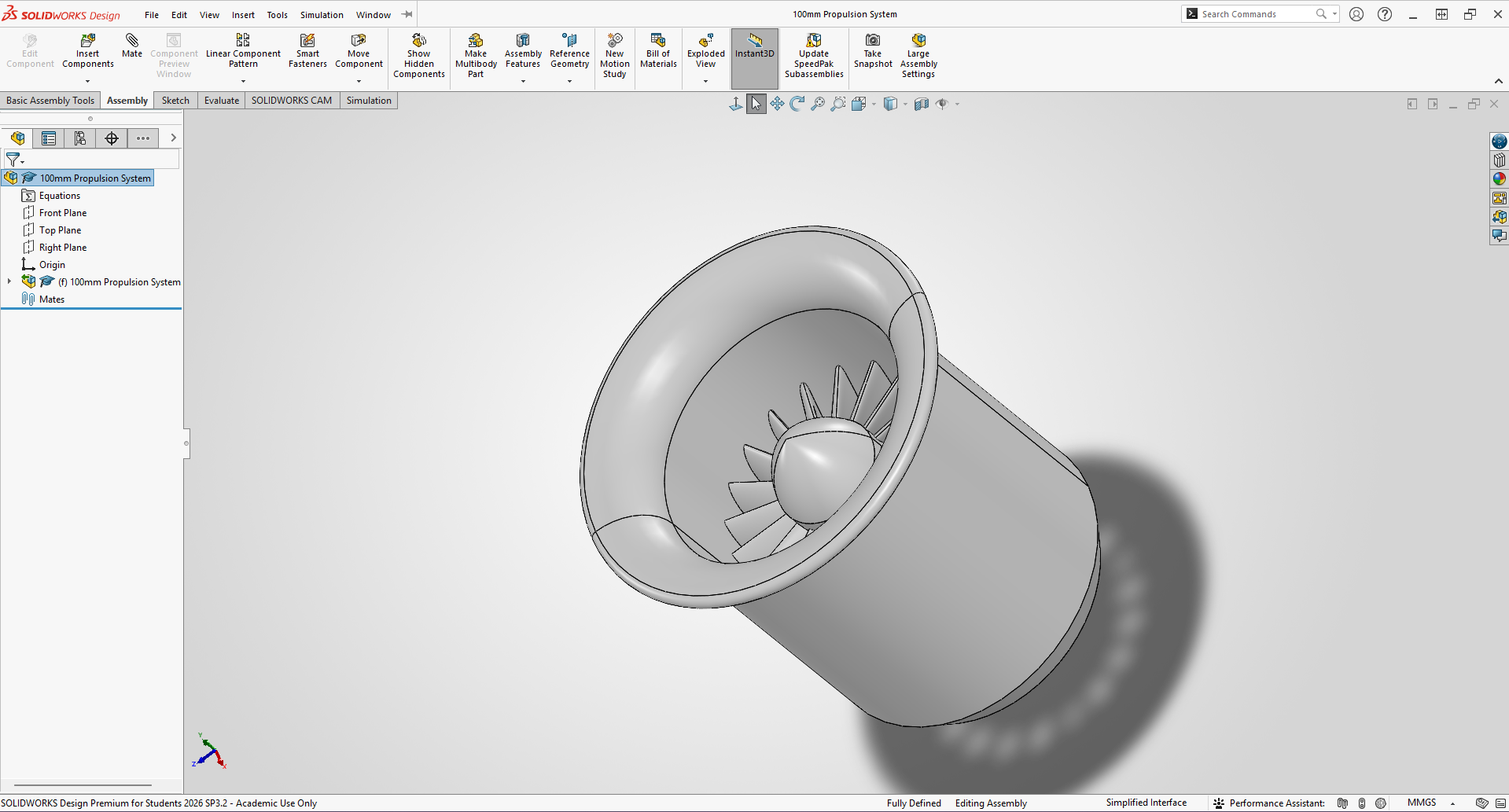
100mm Aerodynamic Propulsion System (Ducted Fan Assembly)
Project Overview This project features the complete design and parametric optimization of a high-efficiency 100mm Ducted Fan Propulsion System engineered for UAV and VTOL applications. Designed in SolidWorks, the assembly prioritizes streamlined airflow, structural rigidity, and tight mechanical tolerances across rotating and stationary components. Key Technical Features • Optimized Inlet & Shroud Geometry: Features a prominent 20mm radius elliptical bell-mouth inlet to minimize boundary layer separation, transitioning into a rigid 5mm constant-wall section and a converging exit nozzle to accelerate thrust velocity. • Aerodynamic Tail Cone: A 50mm tall tail cone defined by a smooth 130mm radius curve to reduce wake turbulence and drag at the exhaust exit. • Precision Fit & Clearance: Engineered with a 4.00mm radius (8mm diameter) bore on rotating parts (Rotor Hub & Nose Cone) for secure shaft mounting, paired with a 4.50mm radius bore on stationary components (Stator Pod & Tail Cone) to maintain a frictionless 0.50mm air gap. • Structural Stator Stage: Integrates 2.00mm thick exit guide vanes to bridge the core pod to the main duct while removing airflow swirl to maximize directional force. Software & Methods • CAD Software: Dassault Systèmes SolidWorks • Techniques: In-Context Assembly Modeling, Parametric Surface/Solid Lofting, Circular Patterning, Mechanical Fit Optimization Full case study available on Behance: https://www.behance.net/gallery/255227805/100mm-Propulsion-System-(Ducted-Fan-Assembly)
Aerospace6 CADs

Jayant Gosavi
Sep 3, 2026
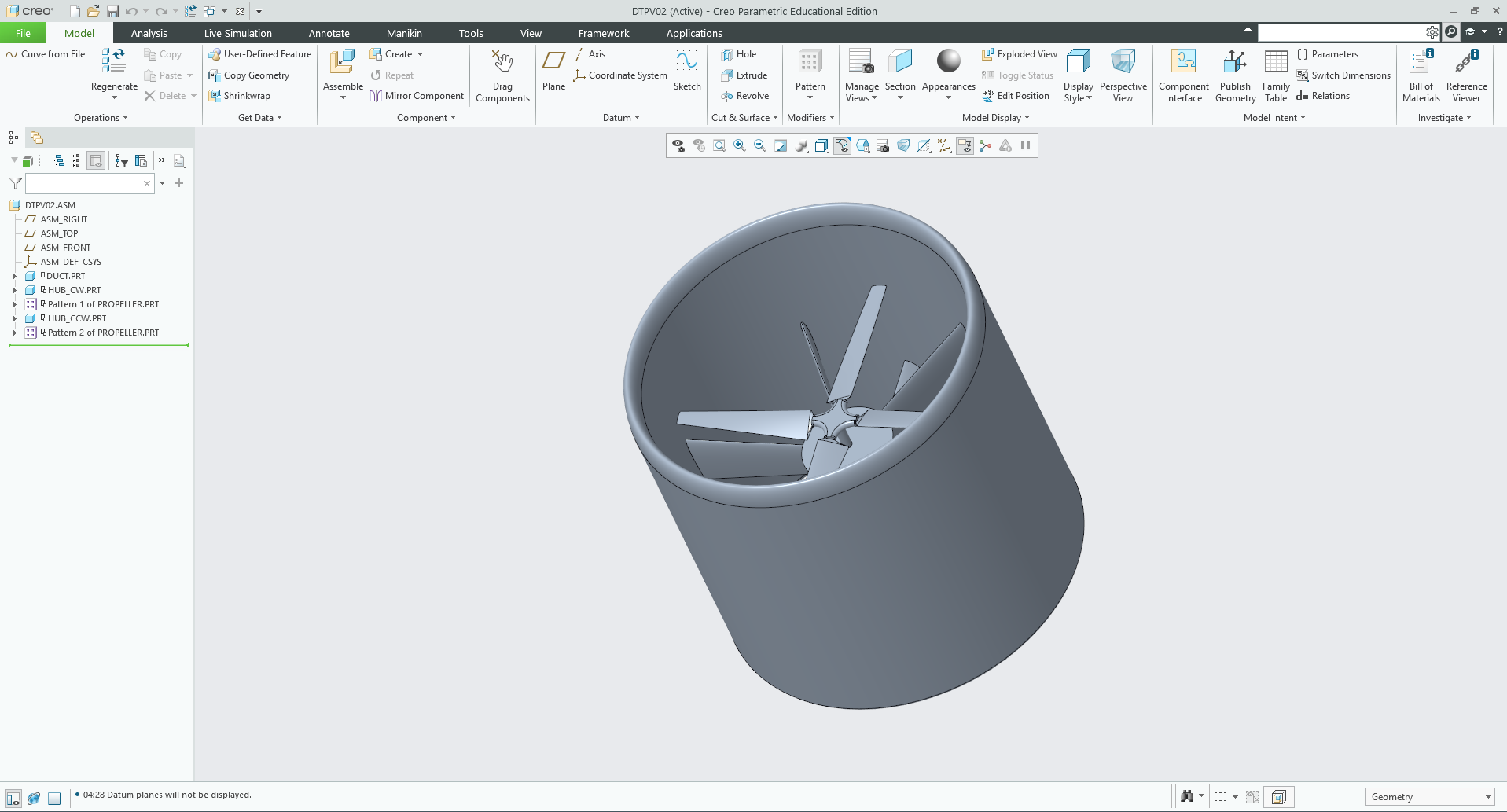
UAV Thrust Optimization with a Ducted Coaxial Propeller
A CFD‑based aerodynamic study of a ducted coaxial UAV propulsion system featuring a NACA 0010 duct, six struts, a centrebody, and dual four‑bladed rotors at 3500 RPM. Using ANSYS Fluent (MRF), the project evaluates performance under 30° oblique inflow and 15 m/s forward flight. Results show that duct augmentation weakens under non‑axial inflow due to asymmetric loading, lip separation, and distorted mass flow. Forward flight further reduces pressure recovery and increases duct drag. Analytical metrics (CT, CP, FM, induced velocity) confirm the CFD trends. This work provides a complete aerodynamic characterisation of a mid‑scale ducted coaxial module and highlights key design considerations for improving UAV propulsion efficiency in realistic manoeuvre conditions. Full case study available on Behance: https://www.behance.net/gallery/255246313/UAV-Thrust-Optimization-with-a-Ducted-Coaxial-Propeller
Aerospace1 CAD
Jayant Gosavi
Sep 3, 2026
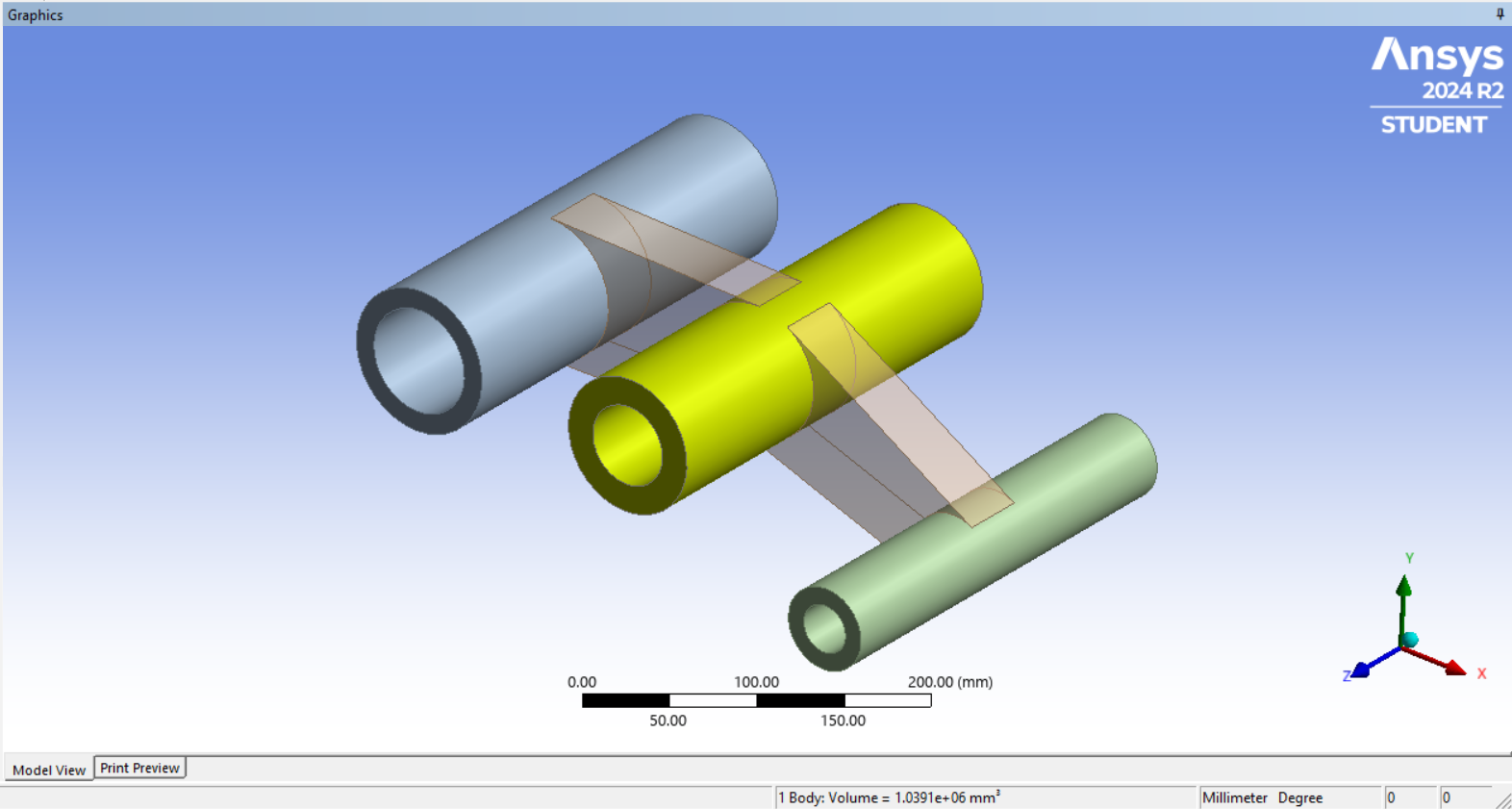
FEA‑Based Optimization of Cylindrical Support
This project applies Finite Element Analysis (FEA) and response‑surface‑based optimization to redesign a steel cylindrical support subjected to a 12 kN bearing load. Using ANSYS Workbench, the study evaluates how varying the web thickness influences structural stress and total mass. A Central Composite DOE and second‑order response surface were used to model the relationship between thickness, von Mises stress, and mass. Optimization was performed with a constraint of ≤35 MPa allowable stress. Results show a clear trade‑off: thinner designs reduce mass but exceed stress limits, while thicker designs improve strength at the cost of weight. The optimal solution was found at 24.25 mm thickness, achieving 33.16 MPa stress and 23.38 kg mass, satisfying safety requirements while minimizing material usage. This project demonstrates practical skills in FEA, parametric modelling, DOE, response surface methodology, and structural optimization, delivering a lightweight and structurally efficient design. Full case study available on Behance: https://www.behance.net/gallery/255252331/FEA-Based-Optimization-of-Cylindrical-Support
Aerospace5 images
Jayant Gosavi
Sep 3, 2026
⚡ Powered by ForgeHub